Cargo theft has become one of the most costly and disruptive crimes facing the UK logistics industry. Since 2020 lorry-related crimes have collectively cost the sector over £1 billion, with the fallout now being felt far beyond haulage firms — through rising insurance premiums, delivery delays, and higher prices for consumers.
According to the Road Haulage Association (RHA), £111 million worth of goods were stolen from lorries in 2024, a sharp increase of almost two-thirds from £68 million in 2023. High-value items such as IT products, tobacco, clothing, alcohol, and electronics remain the preferred targets for organised criminals, accounting for over £56 million in losses in 2024 alone.
Regional Hotspots and Overnight Vulnerability
Cargo crime is not evenly distributed. In Suffolk, police recorded 20 thefts or attempted thefts from HGVs between January and April 2025, with more than half occurring around Ipswich. As a major port city served by key A-roads and supporting both imports and exports, Ipswich has become a prime target. The majority of incidents occurred overnight, when vehicles were parked and drivers were resting.
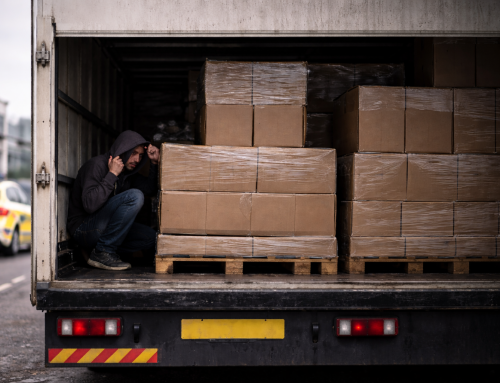
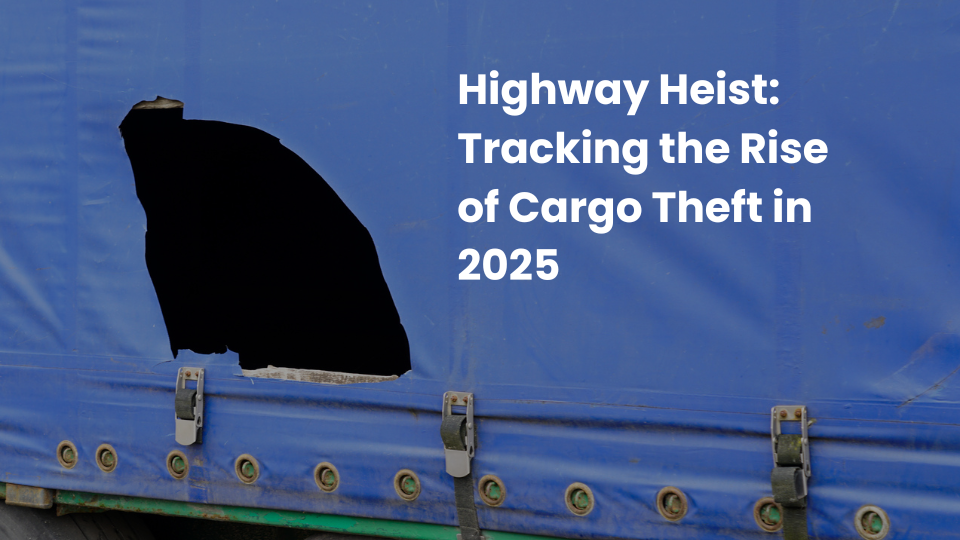
Overnight theft is particularly damaging. Criminals exploit moments when vehicles are stationary, slashing curtains or breaking into trailers to quickly assess whether a load is worth stealing. Even unsuccessful attempts can be costly, leaving operators with damaged vehicles, rejected deliveries, and insurance claims.
Major Incidents Highlighting the Scale of the Problem
2025 saw several high-profile freight crime incidents across the UK:
- £90,000 worth of alcohol stolen from a trailer parked at secure premises in Shotts, North Lanarkshire, at around 2:50am
- A 40ft trailer containing film equipment stolen from Knowsley Industrial Estate
- A fully loaded truck carrying £100,000 of frozen prawns stolen near Cheshire, prompting a £25,000 reward for information
- Repeated thefts involving whisky and tobacco, commodities criminals target due to predictable routes and mandatory driver rest periods
These crimes are rarely opportunistic. Increasingly, they are the work of organised crime groups who understand logistics patterns, driver hours, and security weaknesses.
Curtain Slashing, Fuel Theft, and Effects on Driver
Curtain-slashing remains the most common form of freight crime. According to the National Vehicle Crime Intelligence Service (NaVCIS), 43% of thefts occur at the roadside, while 32% happen at motorway service stations.
Drivers report waking up to find their curtains slashed — sometimes seven or eight vehicles targeted at once. Fuel theft is also widespread, with more than 1,700 incidents recorded last year.
Beyond financial loss, these crimes have a serious psychological impact on drivers. Many describe the experience as traumatic, with some reconsidering their future in the profession altogether. Vehicles with damaged curtains are often refused by delivery recipients, forcing drivers to return loads at significant cost to haulage firms.
Organised Crime and Insider Involvement
Industry experts warn that cargo theft is increasingly driven by highly organised criminal networks, sometimes involving insider information. Intelligence may come from individuals entering supply chains through recruitment agencies as warehouse staff or drivers.
Security consultant Lee Grundle explains that criminals conduct detailed planning — analysing routes, rest patterns, and security gaps. Some gangs even establish fake haulage companies, subcontracting themselves onto legitimate jobs before disappearing with entire loads.
Recent BBC investigations revealed cases where haulage firms were bought using stolen identities, allowing criminals to collect goods worth tens of thousands of pounds before vanishing without a trace.
The Cost to Consumers
The financial impact does not stop with hauliers.
“The haulier’s insurance gets hit. Premiums rise. Suppliers absorb extra costs, and ultimately those costs are passed on to consumers,”
— Lee Grundle, Supply Chain Security Consultant
From vehicle repairs and rejected loads to insurance hikes and delayed deliveries, every theft adds cost into the supply chain, driving up retail prices.
Lack of Secure Parking: A National Weakness
A shortage of secure truck parking is a major contributor to freight crime. Nearly 40% of thefts occur in unsecured roadside parking or rest areas. The RHA estimates the UK needs 11,000 additional lorry parking spaces, forcing drivers to stop in lay-bys or industrial estates when secure sites are full.
Although drivers may pay £30–£50 per night, many facilities still lack proper lighting, CCTV, fencing, or on-site security.
Policing, Funding, and the Road Ahead
Despite the scale of the problem, freight crime remains under-recorded. There is currently no dedicated police crime code, meaning thefts worth thousands are logged the same way as minor vehicle crimes.
A trial to “tag” freight crime is now underway in the West Midlands, led by Labour MP Rachel Taylor, who is pushing for a national freight crime classification to improve tracking and enforcement.
Meanwhile, NaVCIS — the national unit supporting freight crime investigations — receives little direct government funding, relying instead on industry subscriptions.
Looking Ahead to 2026
As cargo theft becomes more organised, more sophisticated, and more brazen, industry leaders warn that without better funding, secure parking investment, and coordinated policing, the problem will worsen.
For haulage firms, insurers, drivers, and consumers alike, freight crime is no longer a niche issue — it is a national supply chain threat with real economic consequences
How ACSS can help against Cargo Theft
As freight crime becomes more organised and more technologically sophisticated, preventing theft now requires intelligence-led security, not just physical deterrents. Solutions must address visibility, access control, real-time alerts and post-incident accountability — particularly during overnight stops and at high-risk locations.
ACSS 360 bird’s-eye camera system has been developed with these realities in mind, providing fleet operators with extended visibility and control across vehicles, trailers and loads. The system delivers a comprehensive security layer around the vehicle, helping to reduce opportunity, improve response times and support investigations when incidents occur.
Advance solutions for vehicle security
- 360-degree and bird’s-eye camera coverage, improving situational awareness around parked and in-transit vehicles
- Highly accurate vehicle and trailer tracking, supporting real-time location monitoring and route analysis
- Door status intelligence, including alerts for door opening, forced access, or trailer unhitching
- Suzi cable and trailer monitoring, ensuring immediate notification if a trailer is disconnected
- Remote visibility of security events, enabling faster decision-making when incidents occur
In collaboration with Maple Fleet Services, ACSS also enables remote control of vehicle locking systems. Fleet operators can lock or unlock vehicles remotely, maintain detailed audit trails of every access event, and apply geofenced locking rules so doors can only be opened at authorised locations.
This level of control provides full transparency over load security, significantly reducing the risk of unauthorised access, insider involvement, or opportunistic theft. The solution is designed to support compliance with TAPA TSR Level 1, meeting the requirements of high-security transport operations where theft risk and cargo value are at their highest.

As highway heists continue to evolve, technologies that combine visibility, control and accountability are becoming an essential part of protecting drivers, cargo and supply chains — not just a “nice to have”, but a necessity.